The table
The coast table: what to eat
Forget the laminated photo menus by the harbour. The food worth crossing town for on the Antalya coast is plainer, cheaper and a great deal better — and here is how to find it.
Most people arrive on this coast with a hotel wristband and a vague plan to "try the local food," then spend a week eating buffet pasta with a sea view. But the real eating happens elsewhere — usually two streets back from any view, and for about a third of the price. So here is the honest version of what to eat along the Antalya coast, and where, starting with the one dish you cannot order anywhere else.
Piyaz, and why Antalya's version is the only one that counts
Piyaz is a white-bean salad. That sounds like nothing — and everywhere else in the country it more or less is nothing: beans, onion, parsley, a splash of vinegar. In Antalya, somebody had the sense to bind it with tahini, and the whole thing changes. The dressing turns creamy and nutty, the garlic comes forward, and a sad picnic side becomes a dish you order on purpose.
You'll see it on the boards as tahinli piyaz, topped with tomato, raw onion, sumac and a halved hard-boiled egg. Order it alongside köfte — grilled meatballs — and the pairing has its own name, köfte piyaz: roughly the local burger and fries, and eaten about as constantly.
If you do one thing on this list, eat piyaz in Antalya. It is the most regional thing on the coast table, it is cheap, and you will spend the rest of the trip mildly disappointed by the plain version everywhere else.
Breakfast is the main event (yes, really)
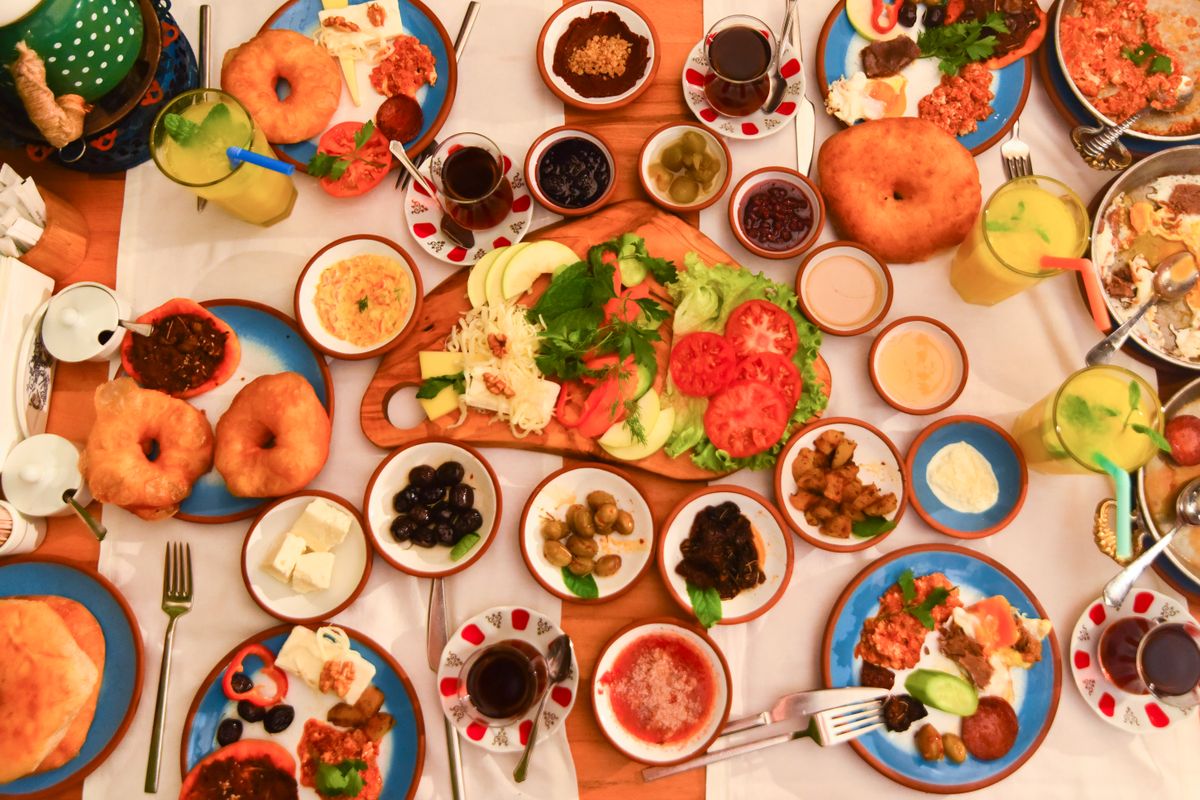
The Turkish breakfast, serpme kahvaltı, is less a meal than a small siege. Serpme means "scattered," and that is what happens: the table fills with little dishes faster than you can name them — white and aged yellow cheese, green and black olives, cucumber and tomato, eggs done several ways, honey poured over clotted cream (bal kaymak — do not skip this), a row of jams, warm bread, and tea refilled until you wave it away.
It is meant to be slow and shared; on weekends locals sit over it for hours. Go hungry, go with at least one other person, and treat it as the day's big meal, not a warm-up. Look for a dedicated kahvaltı place rather than a café that lists breakfast as an afterthought — the difference is roughly fifteen dishes versus four.
One honest warning about tea. Çay is offered constantly and it is glorious, but the glasses are small and the refills endless. Three or four with breakfast is normal. Six, and you'll be vibrating gently by the time you reach the beach.
The grill: kebabs, köfte and the tandır
Kebab is a broad word, so here is what to ask for. Şiş is cubes of marinated lamb or chicken on a skewer — the safe, excellent default. Adana is hand-minced meat pressed onto a flat skewer and grilled hard, properly spicy; Urfa is the same with the heat dialled right down. And tandır is lamb cooked slow in a pit oven until it falls off the bone — no spice, no skewer, just meat and patience.
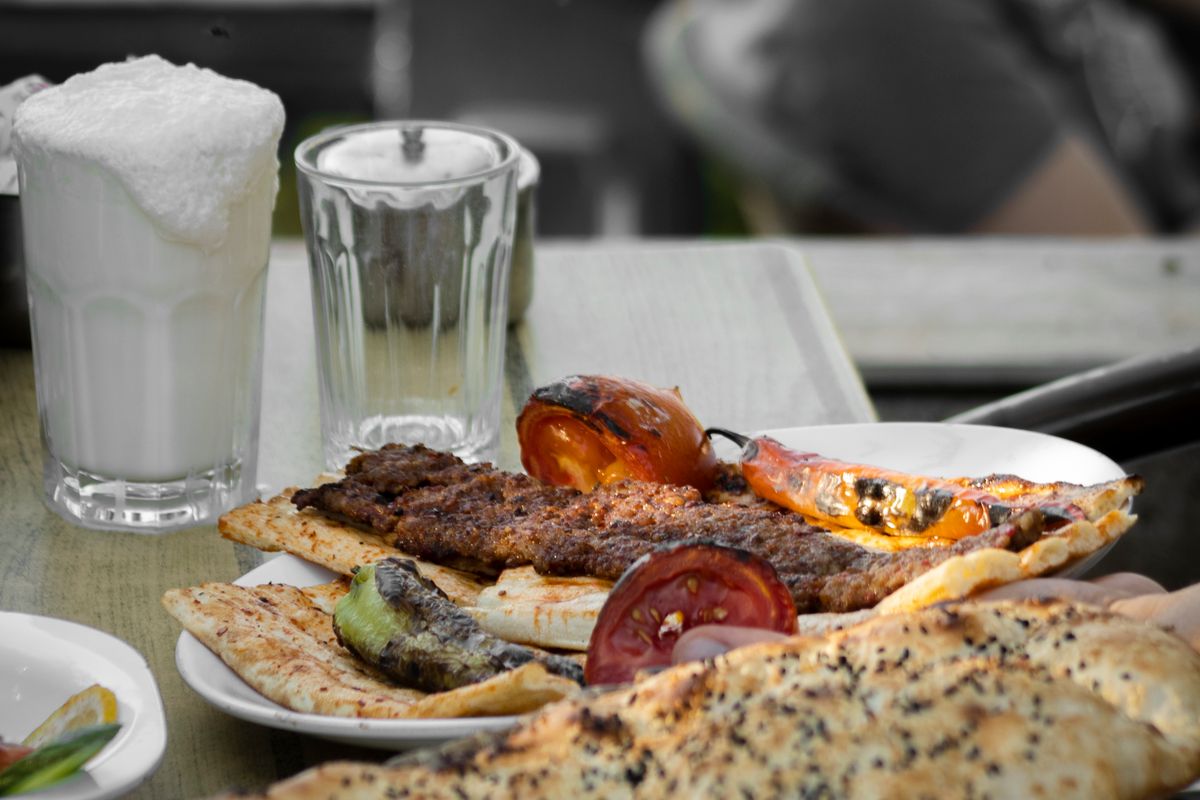
A good kebab salon is one of the best-value meals on the coast: busy, a little loud, the meat arriving on flatbread with grilled tomato, a charred pepper, raw onion dusted with sumac, and a glass of ayran — the salted yoghurt drink that, against all expectation, is exactly right with grilled meat.
Mezes, fish, and the one number you must agree first
Mezes are the small starter dishes, and ordering several with bread is a genuinely good way to eat — especially if you're not in the mood for a slab of meat. The reliable ones to look for:
- Haydari — thick strained yoghurt with garlic and herbs, the cooling anchor of any meze table.
- Acılı ezme — a finely chopped, fiery tomato-and-pepper relish; order it if you like heat.
- Patlıcan salatası — smoky mashed aubergine, charred until it tastes of woodsmoke.
- Sigara böreği — crisp cigar-shaped pastry rolls filled with white cheese.
Then there is the fish. This is the Mediterranean, so fresh sea bass (levrek) and bream (çipura) are what to order — grilled whole, with lemon and rocket. Here is the part nobody tells you: fish is sold by weight, and the bill can surprise you badly if you didn't check. Every time, confirm the per-kilo price and roughly what your fish will cost before it hits the grill. A polite "how much, total?" takes five seconds and saves a nasty moment. This matters most around the harbours and in the touristy stretch of Side, where a sea view comes with creative arithmetic.
Cheap, fast, and quietly brilliant
Not every meal needs a tablecloth; some of the best eating here is sold from a counter or a griddle. Gözleme is a thin hand-rolled flatbread folded around cheese, spinach or potato — often cooked by a woman sitting cross-legged in the window, which is how you know it's the real thing. Pide is the boat-shaped flatbread, topped and baked, somewhere between a flatbread and a pizza and better than that sounds. And lahmacun is the thin, crackly round spread with spiced minced meat: squeeze on lemon, pile on parsley, roll it up, eat it with your hands for almost nothing. None of it appears on a resort menu.
Dessert, and the citrus you didn't expect
Two desserts. Künefe first: shredded pastry packed around mild cheese, baked until the bottom crisps, then drowned in syrup and served hot so the cheese pulls into strings. Sweet, salty and faintly absurd, it's the coast's signature pudding — eat it the same day it's made, ideally still steaming. Baklava is the other, and the only thing to know is that good baklava shatters and bad baklava is wet; a dedicated baklava shop always beats a restaurant's default tray.
Drinks beyond tea: Turkish coffee, thick and tiny with the grounds settled at the bottom (don't drink the last sip). And — this is citrus country — fresh juice pressed at street stalls, pomegranate (nar) and orange squeezed in front of you, sharp and cold. For what a day of eating actually adds up to, we kept notes in our guide to when to go and what the coast costs.
Where to eat, without the regret
The rule of thumb is embarrassingly simple. Walk past anything with a laminated photo menu, a multilingual board, and a man outside whose job is to talk you in — those places exist to feed people once. Instead, look for one of these:
A lokanta — the home-style canteen where trays of stews, beans, stuffed vegetables and rice sit behind glass; you point, they plate, you eat what the neighbourhood eats. A busy kebab salon full of locals at lunch. Or a dedicated breakfast spot. For the city's eating geography, our piece on Antalya and the old town of Kaleiçi goes street by street.
And if you're on an all-inclusive package, the only instruction that matters is: leave the buffet. Not every meal — nobody's judging — but get out for breakfast at least once, a lokanta lunch, and a fish dinner with the price agreed first. You'll remember the food outside the hotel far longer than the food inside it. For more, both Lonely Planet's Antalya pages and the official Go Türkiye site are worth a read — and if you fall for piyaz, as everyone does, there's background on the dish itself.
The shortest honest verdict: a proper Turkish breakfast, a piyaz-and-kebab lunch at a lokanta, fresh fish once with the price agreed first, and one plate of künefe. That sequence will teach you more about this coast than a week of hotel buffets ever could.