Coast towns
Kemer and the pine-backed coast
Forty minutes south-west of Antalya, the mountains stop pretending to be hills and fall straight into the sea. This is the pine-and-pebble resort coast — and Kemer is its front door.
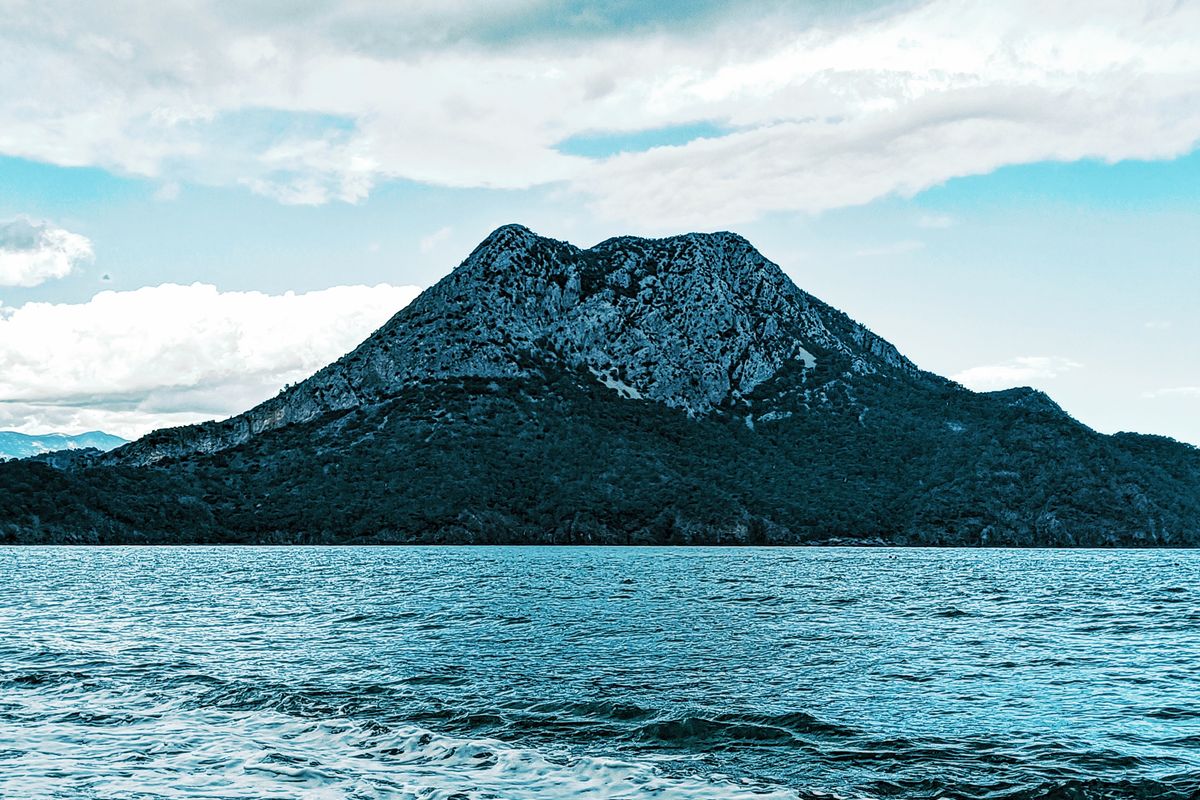
You feel the change before you see Kemer. The road out of Antalya runs flat for a while, past greenhouses and airport sprawl, and then the Beydağları — the local wall of the Taurus range — close in on the right and the coast narrows to a thin green seam between rock and water. By the time you reach the town, the mountains are rising more or less vertically out of a sea that really is the colour the postcards claim.
Kemer itself is a purpose-built resort, and it doesn't hide it: a marina, a tidy seafront, a pedestrianised strip of bars and shops, a stretch of beach-club umbrellas. If you came looking for crooked old streets and a fishing harbour, that's not this town — go west to Kaş and Kalkan for that. What Kemer has instead is the scenery, the water, and an easy base for reaching the genuinely good stuff scattered along the coast around it.
The town and the marina — pleasant, not romantic
Be honest with yourself about Kemer and you'll have a better time. It's a holiday town built for package crowds, and on this coast that crowd has long leaned Russian and German, with all the dual-language menus that implies. Prettiest part is the marina — yachts, a few restaurants, the mountains as a backdrop — and the promenade is a fine place to walk off dinner. Like nearly everywhere along here, the beach is pebble, not sand.
That pebble matters more than it sounds. With no sand to stir up, the water stays clear, sometimes startlingly so. Your feet, though, pay for it.
One small thing that saves the day
Pack water shoes, or buy a cheap pair from any beachfront shop the first morning. Every bay here is rounded stone — lovely to swim from, miserable barefoot. Repeat visitors all have them; first-timers limp.
The string of resort villages — Beldibi to Tekirova
Kemer is less one place than the anchor of a chain of beach villages strung along the coast road, each in its own bay. Knowing the rough order helps when you're picking a hotel:
- Beldibi — closest to Antalya (around 15 km north of Kemer), long pebble beach, mountains right behind the back row of hotels.
- Göynük — gateway to the canyon (more on that below), with a wide beach of its own.
- Çamyuva & Kiriş — quieter, greener, more "stay put at the hotel" than "wander into town".
- Tekirova — furthest south of the main cluster (about 12 km from Kemer), clean water, fine pebble, and the closest base to Phaselis.
None of these are destinations in the sightseeing sense. They're places to sleep, swim and eat, and the differences are mostly about how lively or how dead you want your evenings. Pick by that, not by the brochure photos, which all look identical for a reason.
Göynük Canyon — where you go to get cool
About 10 km inland from Kemer, the Göynük river has cut a narrow gorge into the foot of the Taurus, and walking up it is the best antidote to a hot afternoon on the coast. A path follows the water past a series of pools and small falls; the further you go, the narrower and cooler it gets, until the rock walls close in overhead and the temperature drops a few degrees.
You can do it two ways. Easy version: a flat riverside stroll to the first pools, sandals and a swim — fine for families and lazy days. Full version: proper canyoning with a guide — ropes, scrambling, jumping into pools. Decide which you're up for before you go, because the operators at the entrance will happily sell you the adrenaline package either way.
The coast gives you the view; the canyon gives you the shade. On the third 35-degree day, the second one starts to feel like the better deal.
Phaselis — the loveliest way to mix a swim with some ruins
If you do one thing from Kemer, make it Phaselis. About 16 km south, an ancient Lycian port city sits scattered through umbrella pines on a small headland, and what makes it special is that it never got tidied into a fenced-off archaeological park. The ruins and the beaches are the same place. You walk the old marble main street between a Roman theatre and a bath house, then swim straight off the stones of a harbour traders were using two and a half thousand years ago.
Three harbours — north, central (the main one) and south — sit within an easy morning's wander. Founded, the story goes, by colonists from Rhodes in the 7th century BC, the city later changed hands more times than anyone can track. You get the agora street, a theatre with sea views, the stubs of an aqueduct, and water clear enough to see your shadow on the seabed. Go early — by midday the day-tour boats arrive and the central bay fills up.
Keep going south and you reach Olympos, Çıralı and the Chimaera flames — the same ruins-and-beach theme, with a bit of mythology after dark.
Tahtalı by cable car — 2,365 metres, ten minutes
Behind it all stands Mount Tahtalı, which the ancients called Olympos (one of several mountains in the region to claim the name). A cable car runs from near sea level to the 2,365-metre summit — one of the longer lines in Europe — climbing the whole way in about ten minutes, in glass cabins, over pine forest and the Beydağları National Park.
On a clear day, the view takes in the entire resort coast: Kemer, the villages, the bays, the line where green meets blue. Two caveats before you commit:
- Weather is everything. If there's haze or cloud sitting on the summit, you've paid to stand inside a cloud. Pick a clear morning and check before you buy.
- It's cold up there. Sea level can be sweltering while the summit is windy and ten degrees colder. Bring a layer even in high summer.
Done on the right day, it's the best overview of this coast you'll get. Done on the wrong one, it's an expensive lift to a grey wall.
How to get there, and the honest verdict
Kemer is roughly 40 to 45 minutes from Antalya by road. From the city you can take a dolmuş (the shared minibus) down the coast for very little, or arrange a private transfer if you're arriving at the airport with bags and don't fancy the bus shuffle on day one. The villages south of Kemer have their own local minibuses, so once you're based here, getting to Phaselis or a quieter beach is cheap and simple.
So, is it worth it? Yes — but be clear about what you're buying. You don't come to Kemer for the town; you come for the setting: mountains falling into water, pine holding the slopes, a sea clear enough to forgive the pebbles. Build a few days around a swim at Phaselis, a cool morning up the Göynük gorge and a clear-day run up Tahtalı, and this becomes one of the better-looking corners of the whole Riviera. Treat it as a beach-club town and you'll wonder what the fuss was about.
For the official line on the resort, the national tourism board's Kemer overview and the Phaselis background are useful starting points; the mountain and its forest sit inside the protected Beydağları Coastal National Park.