Coast towns
Alanya: the castle, the cave and the beach
The liveliest, cheapest end of the coast sits under a great rock headland 125 km east of Antalya. The castle is the real thing, the beach is genuinely good, and the only real catch is how you get there.
Most of the western Riviera tries to look discreet. Alanya does the opposite, and we mean that as a compliment. This is the brash, value-for-money end of the coast — package hotels stacked along the bay, restaurant touts who have heard every nationality's word for "no thank you", a nightlife strip that does not pretend to be anything else. Above all of it, on a 250-metre rock shoving out into the Mediterranean, sits one of the best castles in this part of Turkey. That contrast is the whole point of the place.
You come for two things, really: the rock and the beach.
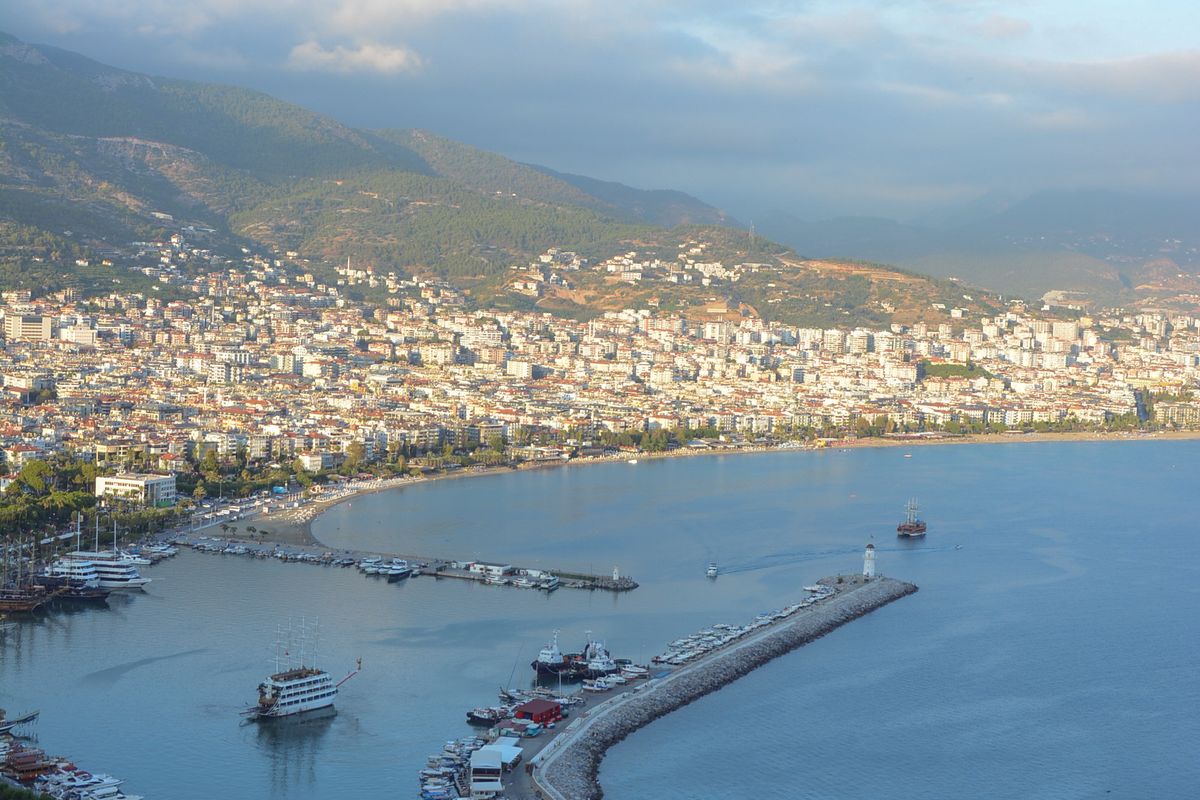
The rock, and the long walk up it
Alanya Kalesi is a Seljuk castle from the 13th century, with something like six and a half kilometres of walls girdling the headland. It is on the UNESCO tentative list and you can see why someone made the case. The walls climb, drop and reappear over a peninsula the sea has been gnawing at for eight hundred years, and from the top the view does exactly what you hope a clifftop castle view will: the whole double bay below you, the town a toy version of itself, the water shading from green to deep ink blue further out.
Getting up there is the catch. The old quarter — the genuinely characterful part of Alanya, all timber houses and bougainvillea and cats — clings to the castle slope above the resort sprawl. On a cool morning it is a lovely climb through that old village; in July, at midday, it is a sweaty grind up a steep, shadeless road. A small dolmuş (shared minibus) runs up from the centre, and a cable car from the Cleopatra Beach side takes the worst of the gradient out of it. We would not be too proud to take the easy way up.
The castle is the reason Alanya is more than a beach resort with a tan line. Go early, before the cruise crowds and the heat, and give the old quarter on the way up as much time as the walls at the top.
The Red Tower and the medieval shipyard
Down at the harbour, the Kızıl Kule — the Red Tower — is the symbol of the town, and it earns it: a five-storey octagon of red brick and stone, roughly 30 metres across and 30 high, built in 1226 by Alaeddin Keykubad I, the same sultan who raised the castle. It went up to defend the port, and standing under it the logic is immediate — nothing was getting into this harbour without the tower having an opinion about it. Climb the inside for harbour views and the central cistern that kept the garrison in water (Lonely Planet has the visiting details).
A short walk along the waterline is the Tersane, the Seljuk shipyard — five linked vaulted bays cut into the rock at the sea's edge. It is the only surviving Seljuk shipyard anywhere — a genuinely rare thing to stand in front of — and easy to miss, because it does not announce itself. Tower and shipyard together reward a slow hour rather than a photo and a move-on.
- Red Tower (Kızıl Kule): on the harbour, hard to miss — the red octagon. Worth the climb for the views and the cistern.
- Tersane (shipyard): a 5–10 minute walk around the headland from the tower; quieter, older feeling, the rarer sight of the two.
- The castle (Alanya Kalesi): up top — allow a couple of hours and bring water if you walk it.
- Damlataş Cave: down by Cleopatra Beach, a 10-minute detour from the sand.
Cleopatra Beach, which actually lives up to the name
On the west side of the headland is Cleopatra Beach, a long sweep of pale, fine sand that — local legend insists — Mark Antony shipped in as a gift for Cleopatra. The sand almost certainly did not arrive from Egypt by boat, but it is unusually fine for this coast, and the beach is a proper one: a wide Blue Flag curve with the castle rock looming over the far end. It gets busy, of course, but it is long enough to absorb the crowd and shelves gently enough for an easy swim.
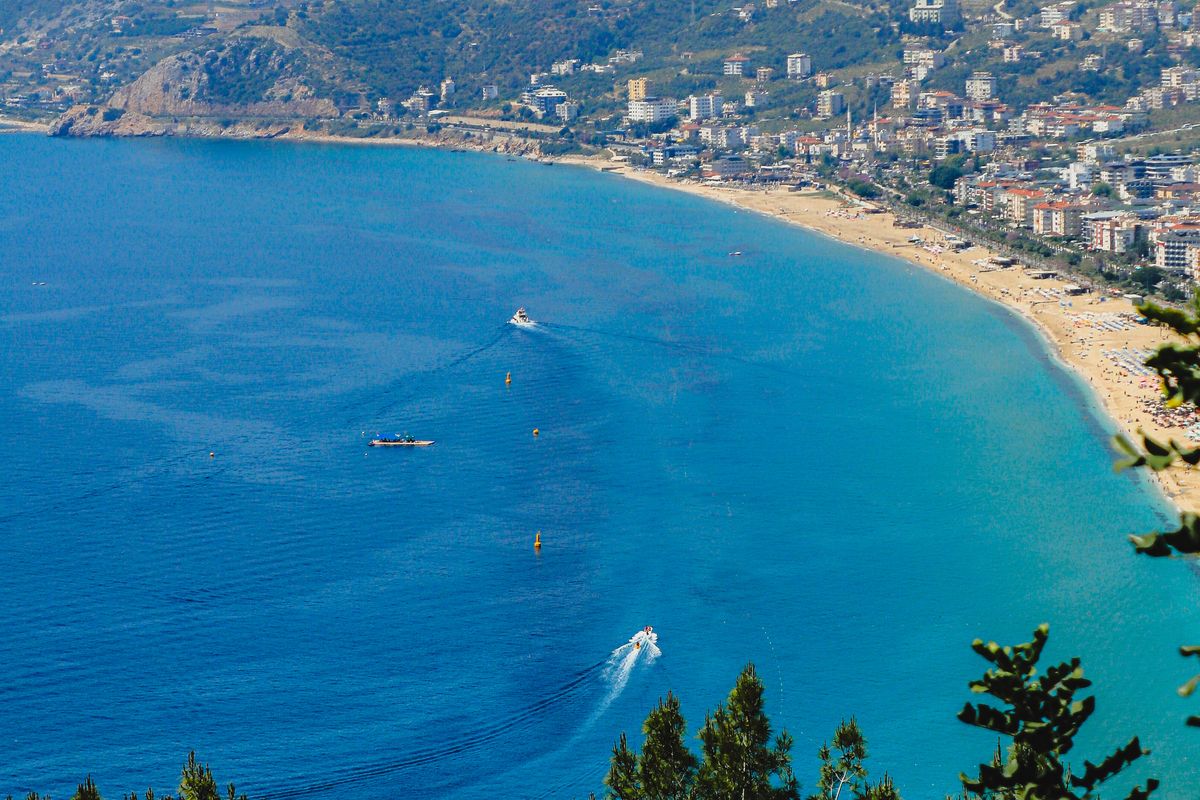
For a break from the sunbed, the Damlataş Cave sits at the eastern end of the beach: a small stalactite cave with a steady microclimate around 22°C and high humidity, where for years people with asthma have sat for the air. You do not need a respiratory condition to enjoy ducking out of 38°C into a cool, dripping cavern for twenty minutes. A quick visit — five minutes of walking, not a half-day — but a nicely odd one.
Pirate boats, and other ways to spend a hot afternoon
From the harbour, boats line up for tours into the sea caves under the castle cliffs — the Pirate Cave, the Lovers' Cave, the Phosphorus Cave. Half the fleet is dressed up as pirate galleons with a sound system and a foam party, and yes, it is exactly as silly as it sounds. It is also a genuinely good way to see the headland from the water — the angle the castle was built to dominate — and the swim stops are the real draw.
One bit of honesty: shop around the harbour and the price falls — the first quote is never the price. If a quiet day with a swim matters more than a DJ and foam, ask for the smaller, calmer boats; they exist, the touts just lead with the party version.
My tip: castle in the morning, a late-afternoon boat back along the cliffs. You will have seen the rock from above and below by sundown — the whole shape of the place in a day.
The honest bit: getting here is the catch
Here is the thing nobody mentions when they sell you the cheap Alanya package. It is a long way from Antalya's main airport — around 125 km, realistically two to two and a half hours by road, longer when the coastal traffic backs up around Manavgat and Side in high season. After a budget flight, that transfer eats a chunk of the savings and most of your first afternoon.
The fix is Gazipaşa-Alanya airport (GZP), a much smaller airport about 40 km east of town — a 30–45 minute drive instead of two-plus hours. Not every route uses it, and flights can be pricier or less frequent, so check it before you default to Antalya (AYT). If a Gazipaşa flight exists for your dates at a sane price, take it. We get into both airports and the run down the coast in our guide to Antalya Airport and the run east.
One more note on where to stay. The beachfront strip is functional but anonymous — fine for a sunbed and a buffet and not much else. The old quarter on the castle slope is where the character is: small guesthouses, sea views, a steep walk home but a real neighbourhood. If you want Alanya to feel like a place rather than a holiday-shaped box, sleep up there.
So, the verdict. Alanya gets unfairly dismissed by people who never leave the strip. The castle is a serious piece of medieval Anatolia, the Red Tower and shipyard are rare, Cleopatra Beach earns its reputation, and the place runs on the best budget energy on the coast. The only real asterisk is the distance — so plan the transfer properly, or fly into Gazipaşa and start the holiday two hours sooner. For how it compares with the quieter, ruin-heavy towns to the west, see our piece on Side and its seafront temple.