Day trips
Pamukkale and the big day trips
Some of the famous names sit three hours inland from your beach, and a few of them aren't day trips at all. Here is what is reachable in a day from the Antalya coast, how long the road really takes, and which trips earn the early alarm.
Every hotel lobby sells the same wall of laminated day trips, and they all look equally close on the poster. They are not. Pamukkale is a real expedition; Köprülü Canyon is a drive into the mountains; the Lycian coast is a slow, atmospheric day. Here is the honest version — distances first, romance second.
Pamukkale — the long drive everyone makes anyway
Pamukkale is the famous one, and the famous one is far. Reckon on roughly three hours each way from Antalya, sometimes three and a half depending on the road and the minibuses crawling up the passes. That single fact decides how you do this trip: a long full-day coach run, gone before breakfast and back after dark.
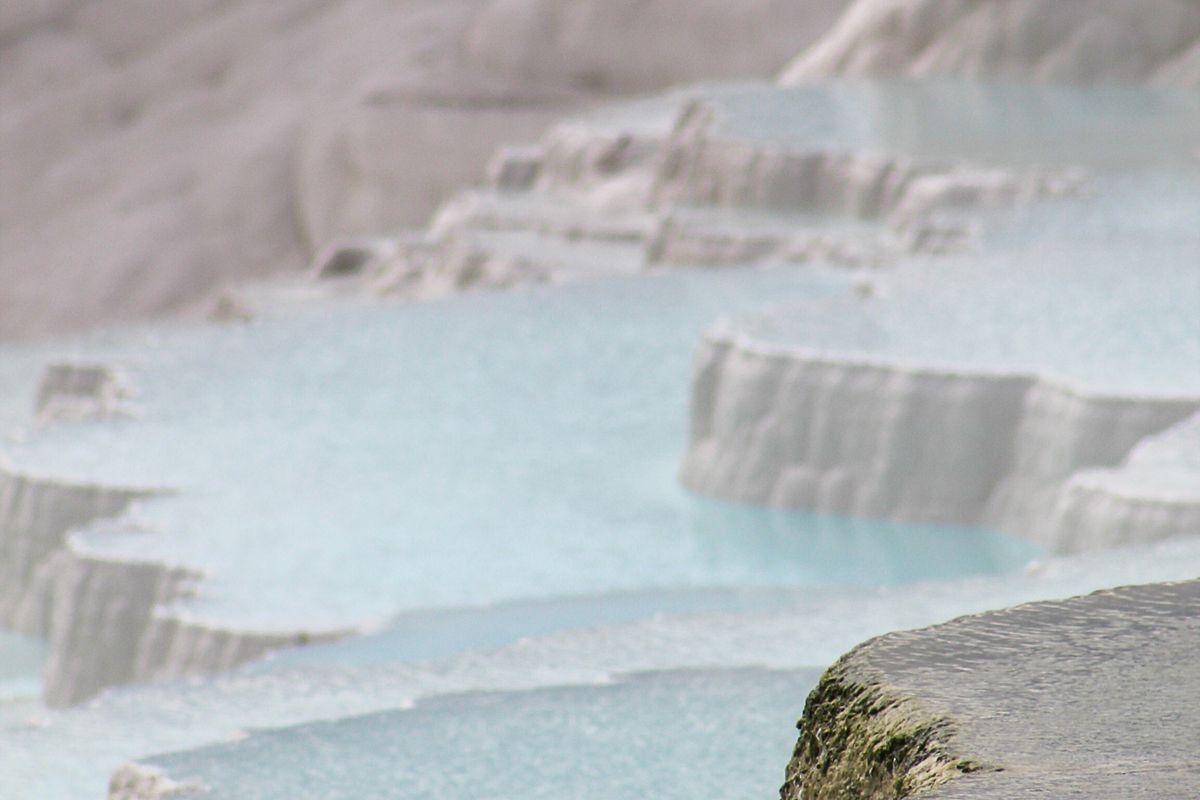
What you are driving for is the travertine — tiers of white mineral terraces stacked down the hillside, each shallow basin holding a pool of pale turquoise water. The Turks call it the "cotton castle," and from a distance it genuinely looks like snow on the slope. You walk the terraces barefoot (shoes off is the rule, to protect the surface), ankle-deep in warm water with the valley below.
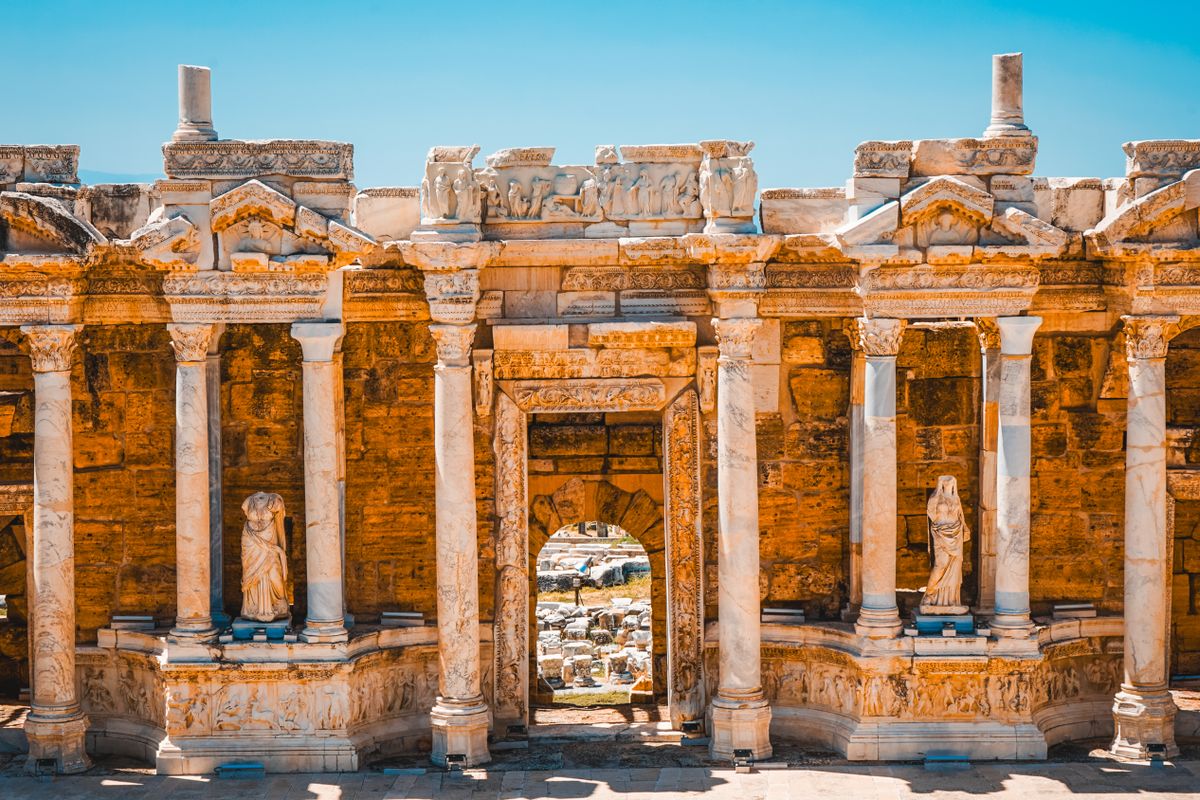
Behind the terraces sits the part most day-trippers underrate: Hierapolis, a sprawling Roman spa city built around the same hot springs. It is big — a steep restored theatre with its carved stage front still standing, a vast necropolis of tombs along the old road, the colonnaded streets of a once-wealthy resort. People photograph the white pools and ignore the ruins, which is backwards.
The other thing here is the so-called antique pool (sold as Cleopatra's Pool): a warm, fizzing spring-fed bath where you swim among submerged column drums and fallen marble, dropped into the water by an old earthquake and simply left there. It costs extra on top of the site ticket, but floating over toppled Roman columns sticks with you — and the coach tours never warn you that you might want to swim.
Pamukkale is worth doing once, for the spectacle, and probably not twice. Six hours on the road is a fair trade the first time and a grind the second.
Köprülü Canyon — the day you get wet on purpose
This is the adrenaline trip, and the most fun thing you can do inland without driving half the day. Köprülü Canyon sits about an hour and a half up into the Taurus mountains, which by local standards counts as close. You raft a stretch of the Köprüçay, a cold, clear river through a pine gorge, and the water stays bracingly cool even in high summer — the entire point when the coast is baking.
It is not white-knuckle rafting; the rapids are real but forgiving, the kind families do. The scenery does the work: steep forested walls, a second-century Roman bridge arching high over the river, the cold green water you keep falling into. Most tours add a lazy riverside lunch at the end. A few notes before you book:
- You will get soaked through, so wear nothing you mind losing and leave the phone in the bus.
- The water is genuinely cold — lovely in July, a shock in May or October.
- Wear sandals or old trainers that strap on. Flip-flops disappear downstream within the first minute.
The Lycian sights west — atmosphere over efficiency
West of Antalya the coast turns into Lycia, the old land of rock-cut tombs and drowned harbours, and a day out here is one you do for mood rather than headline sights. The classic pairing is Demre with a boat trip over Kekova.
Demre is ancient Myra, and it delivers two different things in one stop. There is the rock face honeycombed with Lycian tombs carved straight into the cliff, like little temple facades cut for the dead, with a well-kept Roman theatre right below. And there is the church of St Nicholas — the fourth-century bishop who, by a long and well-worn route, became Santa Claus. The church is modest and much restored, but standing where that legend started is a quiet kind of strange.
From there most trips push down to the water for a Kekova boat cruise. The draw is the sunken city: a Lycian town that slid below the surface after an earthquake, so you glide over half-submerged staircases visible through the clear water, with the castle of Simena on the hill above. There is usually a swim stop in a sheltered bay. It is unhurried and lovely, and a long haul of driving for the actual sightseeing — go for the day, not the checklist. If you would rather know the closer ruins first, our notes on Aspendos, Perge and the ancient cities cover what is reachable in a relaxed morning.
Düden — the day trip that takes an afternoon
Not everything worth seeing demands a 6am bus. The Düden waterfalls are practically in Antalya, split in two. The upper falls drop through a wooded park on the city's edge, with a path that leads behind the curtain of water into a cave. The lower falls do something unusual: the river reaches the cliffs at Lara and plunges straight off the edge into the Mediterranean, best seen from a boat looking back at the coast. This is the half-day filler for when you cannot face another long coach — a couple of hours and you are back on the beach by late afternoon.
What is NOT a day trip — say it louder
This is where the laminated posters lie by omission. A couple of the names everyone wants to tick off simply cannot be done from the Antalya coast in a day.
Cappadocia — the fairy chimneys and balloons are in central Anatolia, an overnight country away. You fly there from Antalya and stay at least one night. Anyone selling it as a single day out of your beach hotel is offering fourteen hours of bus for two hours in a valley. Don't.
Ephesus — the great Roman ruin is up near İzmir, far to the northwest. A wonderful place and a genuine day trip from Kuşadası or Selçuk, but from Antalya it is too far to be anything but a forced march. Pair it with a stay on that coast instead.
Organised tour or your own car?
Almost all of these are sold as packaged tours, and for some that is the sensible call: if the drive is the painful part, let someone else do it; if the destination rewards your own timing, drive yourself. A hire car is the better way to do Köprülü, Demre and the inland ruins. You set off when you like, skip the souvenir-stop choreography, stop for lunch in a village no coach visits, and leave when the light is good. Our piece on getting around the Turquoise Coast covers road conditions, fuel and parking before you take on the passes. Pamukkale is the exception: three-plus hours each way of motorway and mountain road, in summer heat, is precisely the drive you want to hand to a coach. Sleep on the way out, doze on the way back — for some destinations, the laminated poster has a point.
So the honest scorecard: Pamukkale once, for the spectacle. Köprülü for the cold water and the adrenaline. The Lycian coast west for the atmosphere — and the two names that aren't day trips at all, left for the holidays they belong to. For the official background, the UNESCO listing for Hierapolis-Pamukkale is worth a skim, and the Lonely Planet Mediterranean coast pages help you get your bearings along this stretch.